
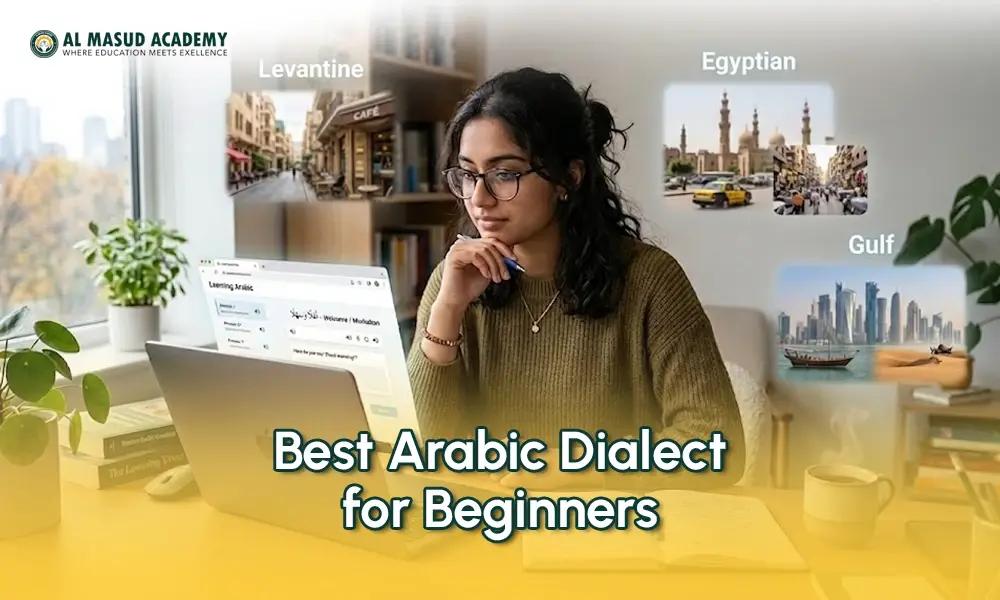
Best Arabic Dialect to Learn for Beginners: An Honest, No-Fluff Guide
Arabic is not one language. It has many spoken dialects, and picking the wrong one wastes months of your time. Modern Standard Arabic (MSA) is a formal, written language. Nobody speaks it at home or at work. Egyptian Arabic is the most recognized dialect globally because of Egypt’s film and TV industry. Levantine Arabic is popular online but has limited reach outside Lebanon, Syria, Jordan, and Palestine. Gulf Arabic (Khaleeji) is the dialect of the UAE, Qatar, Saudi Arabia, Kuwait, Oman, and Bahrain. It is the most practical choice for anyone living or working in the GCC.
So you have decided to learn Arabic. Great choice. Then you discovered that Arabic is not just one language. It is a family of dialects, each of which sounds quite different from the others.
Now you are staring at a list of options, wondering where to even begin. Today’s complete guide gives you a straight answer.
No complicated reasons. No confusing linguistics. Just clear, honest advice on choosing the best Arabic dialect to learn for beginners, so you can start with confidence and actually use what you learn.
Why Dialect Choice Matters More Than Most Courses Admit
Picking the wrong dialect means you can study for a year and still not understand the people around you. Dialect is what real people speak. Choosing the right one from day one saves time, money, and frustration.
Most beginner Arabic courses skip over this part. They either push Modern Standard Arabic as the default or pick Egyptian Arabic because it is the most well-known. But neither of those is the right answer for everyone.
Here is the problem. Arabic has two very different forms: the formal written version (MSA) and the spoken everyday dialects. If you learn only MSA, you can read a newspaper, but you cannot chat with your neighbor.
If you learn the wrong spoken dialect, the people around you in your city or workplace will sound like a foreign language even after months of study.
The question of how to choose an Arabic dialect should be the very first thing you think about. Your goal, your location, and your daily life should drive that choice.
The Main Arabic Dialects: A Quick Overview
There are four major dialect groups. MSA is formal and written. Egyptian Arabic leads in media. Levantine is popular online. Gulf Arabic is the language of the GCC economic zone.
Here is a simple look at each major option before we go deeper:
Modern Standard Arabic (MSA): What It Is and What It Is Not
MSA is the formal, standardized version of Arabic. You find it in newspapers, official documents, textbooks, and news broadcasts. Every Arabic-speaking country teaches it in schools.
But here is what most courses will not tell you directly: nobody speaks MSA in real life. When an Emirati goes to the market, they speak Gulf Arabic.
When an Egyptian calls a friend, they speak Egyptian Arabic. MSA is like formal Latin in Europe. Important for reading and history, but not the language of the street, the office lunch room, or the family dinner table.
MSA provides the grammatical foundation. A spoken dialect gives you the ability to actually communicate. For most beginners, starting with a spoken dialect is the faster path to real conversations.
Egyptian Arabic: Most Recognized, But Is It Right for You?
Egyptian Arabic, also called Masri, is the most widely recognized Arabic dialect in the world. Egypt has a population of over 105 million people, and its film and TV industry has been exporting content across the Arab world for decades.
Because of it, most Arabic speakers have at least some exposure to the Egyptian dialect, even if they do not speak it themselves.
For the question of Egyptian Arabic vs Gulf Arabic for beginners, Egyptian Arabic wins on media access and global familiarity.
But it is hard if you are living or planning to work in the Gulf. Walking into a UAE office speaking Egyptian Arabic is like arriving in Tokyo having learned Brazilian Portuguese. The sounds, words, and rhythms are just different enough to create a wall.
Levantine Arabic: Popular Online, Limited in Reach
Levantine Arabic is spoken in Lebanon, Syria, Jordan, and Palestine. It has a soft, melodic quality that many learners love. Lebanese music and Syrian TV dramas have given it a growing audience online.
The concern with Levantine Arabic for beginners is reach. If you are not connected to those four countries through family, work, or travel plans, the practical payoff is limited.
It is a beautiful dialect, but geographically narrow. It also has fewer structured learning courses than Egyptian or Gulf Arabic.
Gulf Arabic (Khaleeji): Practical, Professional, and Underserved
Gulf Arabic, also called Khaleeji, is spoken across the UAE, Qatar, Saudi Arabia, Kuwait, Bahrain, and Oman.
The GCC region is home to one of the world’s most powerful economies, with millions of expatriates working across oil, finance, technology, healthcare, construction, and hospitality.
This dialect is often called underserved because most mainstream Arabic courses do not teach it properly.
Yet it is the dialect that actually matters if you live or work in the Gulf. Gulf Arabic for beginners is a very achievable goal.
Gulf Arabic is spoken at a slower, clearer pace than Egyptian Arabic, and it follows grammar patterns that are closer to MSA in several ways, which can make the transition easier for motivated learners.
How to Choose the Right Arabic Dialect for You
Ask yourself one question. Where will I actually use this language? That single answer will point you to the right dialect almost every time.
If You Are Moving to or Working in the Gulf Region
Learn Gulf Arabic. Whether you are heading to Dubai, Doha, Riyadh, or Kuwait City, Gulf Arabic is what you will hear in your office, on the street, in the shops, and at social gatherings with local colleagues.
Learning any other dialect will leave you feeling like an outsider even after months of hard work.
Even basic Gulf Arabic makes a real difference.
Locals notice and appreciate when an expat makes the effort to speak their dialect. It builds trust, respect, and genuine connection in ways that speaking only English never will.
If Your Goal Is Watching Arabic Media and Entertainment
Egyptian Arabic is your best starting point. Classic Arabic cinema, popular TV shows, and mainstream Arab pop music largely use Egyptian Arabic or are easily understood through it.
If your goal is to enjoy Arabic content and connect with a wide Arab online community, Egyptian Arabic is your gateway.
Gulf Arabic is growing fast in the media, too. Khaleeji music and Gulf-produced reality TV are popular across the region.
But if media is your primary goal and you have no Gulf connection, Egyptian Arabic currently has the larger content library.
If You Want the Broadest Regional Understanding
If you want to be understood by as many Arab people as possible, the Arabic dialect most widely understood by others is Egyptian Arabic, thanks to its media reach.
However, it is important to understand that no single spoken dialect is universally understood everywhere.
An Egyptian speaker in Morocco or Iraq will still face some gaps. If broad coverage is your goal, MSA paired with Egyptian Arabic gives you the strongest combination for reading, writing, formal speech, and casual conversation across the Arab world.
If You Are Learning Arabic for Business or Career
For anyone eyeing a career in the Gulf, Gulf Arabic is the most useful Arabic dialect to learn. The GCC is where most high-paying job opportunities in the Arab world are concentrated.
Oil and gas, banking, technology startups, hospitality, and logistics are all booming sectors where Arabic-speaking professionals have a clear advantage.
Speaking Gulf Arabic in a business meeting in the Gulf shows cultural investment. It signals that you are not just passing through. That matters to local employers and clients more than most expats realize.
Is Gulf Arabic Good for Beginners? (The Case for Starting Here)
Yes. Gulf Arabic is genuinely beginner-friendly. It is spoken more slowly and clearly than other major dialects, and its grammar has more overlap with Modern Standard Arabic than Egyptian Arabic does.
The question of whether Gulf Arabic is good for beginners comes up a lot, and the answer surprises many people.
Gulf Arabic is often left off beginner lists because fewer courses teach it. But from a pure learning perspective, it has real advantages:
- Slower speech pace. Gulf Arabic is generally spoken more clearly and deliberately than Egyptian or Levantine Arabic. New learners can more easily catch individual sounds.
- Clearer consonants. Many Gulf Arabic sounds are pronounced fully, without the dropping of vowels and consonants that happens in faster dialects.
- MSA overlap. Gulf Arabic shares more grammatical structures with Modern Standard Arabic than Egyptian Arabic does. If you ever want to develop reading skills, this overlap helps.
- High practical value. If you live or plan to live in the GCC, every lesson you learn is immediately usable. This keeps motivation high.
- Growing resources. Structured Gulf Arabic courses, YouTube channels, and conversation communities are growing steadily online.
The concern that the easiest Arabic dialect for English speakers must be Egyptian because of resource availability is becoming less true every year. Dedicated Gulf Arabic learning programs now make it just as accessible for motivated beginners.
Spoken Arabic vs Modern Standard Arabic: What Beginners Get Wrong
MSA is for reading and formal writing. Spoken dialects are for real conversations. Most beginners need both eventually, but starting with a spoken dialect gets you talking faster.
The confusion between MSA and colloquial Arabic is one of the most common reasons beginners get stuck.
Many courses start with MSA because it is the official standard and has the most structured grammar rules.
But then learners arrive in an Arabic-speaking country and realize that nobody around them is speaking what they studied.
Imagine you moved to a French-speaking city and you spent six months learning old formal French from a grammar textbook.
When you arrived, the people around you spoke street French, casual French, fast French with slang and shortcuts.
Your French textbook would help you read signs and official documents. But in the coffee shop, at work, and with friends, you would still struggle.
It is exactly what happens when beginners study only MSA and then try to use it in daily life. The answer to whether I should learn Modern Standard Arabic or a dialect is practical is to learn a spoken dialect first if your goal is communication, and layer in MSA later for reading and writing. Both are valuable.
Just get your priorities right.
Dialect Comparison at a Glance
Here is a clear side-by-side comparison to help you decide:
| Dialect | Best For | Reach | Beginner Ease | Resources |
| Modern Standard Arabic | Reading, formal writing, Quran | All 22 Arab countries (formal) | Moderate (structured grammar) | Very high |
| Egyptian Arabic | Media, entertainment, broad familiarity | Wide (due to film and TV) | Good (many resources) | Very high |
| Levantine Arabic | Lebanon, Syria, Jordan, Palestine | Moderate (regional) | Good (soft sounds) | Moderate |
| Gulf Arabic (Khaleeji) | GCC work, business, daily Gulf life | Strong across 6 GCC nations | Good (slower, clearer) | Growing fast |
| Maghrebi Arabic | Morocco, Algeria, Tunisia, Libya | Narrow (North Africa only) | Hard (fast, mixed vocab) | Limited |
What Most Arabic Courses Won’t Tell You About Dialect Learning
Most popular courses teach what is easiest to market, not what is most useful for your specific situation. Always ask who the course is designed for before you buy.
Here are a few honest truths that most Arabic courses quietly skip:
- You cannot be fluent in all dialects at once. Pick one and go deep. You can pick up other dialects later once you have a solid spoken foundation.
- MSA alone will not help you make friends. If your goal is connection and conversation, a spoken dialect is non-negotiable.
- The most marketed dialect is not always the most useful one for you. Egyptian Arabic is everywhere in language apps. Gulf Arabic is harder to find in mainstream tools. But that does not make Egyptian Arabic the right choice if you live in Qatar.
- Consistent practice beats perfect resources. A structured Gulf Arabic course with live conversation practice will beat a massive Egyptian Arabic app if Gulf Arabic is what you actually need.
- Your accent will improve naturally. Many beginners panic about pronunciation. Do not. After a few months of listening and speaking, your ear adapts, and your accent settles into place.
The format of how you learn matters as much as what you learn. If you are not sure whether live classes or self-paced lessons suit you better, learn live Zoom vs self-paced Gulf Arabic learning breaks it down in a practical way that helps you decide based on your schedule and learning style.
Ready to Start? Here’s How to Begin with Gulf Arabic
Start with basic greetings and daily phrases. Move into structured lessons within the first two weeks. Find real conversation practice as early as possible. Consistency over three to six months will get you to genuine Gulf Arabic conversation.
If you have decided that Gulf Arabic is the right fit for your goals, here is a simple path to get started:
- Week 1 to 2: Learn the most common Gulf Arabic greetings and responses. Shloonak, Zain, yalla, shukran. These open doors immediately.
- Month 1: Join a structured Gulf Arabic course. Focus on listening, basic vocabulary, and phrases for daily situations like shopping, work, greetings, and asking for directions.
- Months 2 to 3: Start using what you know. Talk to colleagues, neighbors, or shopkeepers in Gulf Arabic. Even three sentences a day builds real confidence.
- Months 3 to 6: Move into sentence-level conversation. You should be able to handle basic work and social situations in Gulf Arabic by the end of this period with consistent study.
The spoken Arabic learning path for beginners works best when it is grounded in real-life situations rather than grammar drills.
Focus on what you will actually say in your day, at your desk, in your building lobby, and in your local area.
At Al Masud Academy, all Gulf Arabic courses are built around real Gulf conversations, not textbook exercises.
Whether you choose live Zoom classes or self-paced lessons, the goal should be to speak real Gulf Arabic from day one, not memorize rules you will never use.
Frequently Asked Questions on the Best Arabic Dialect To Learn For Beginners
Should beginners learn Modern Standard Arabic or a dialect first?
It depends on your goal. If you want to speak with people in daily life, start with a spoken dialect. MSA will not help you have conversations. If you want to read Arabic text, understand the Quran, or follow formal news, MSA is important. For most beginners targeting Gulf employment or life in the GCC, start with Gulf Arabic and add MSA later.
Which Arabic dialect is the easiest to learn for English speakers?
Egyptian Arabic and Gulf Arabic are both considered accessible for English speakers. Egyptian Arabic has more learning resources available. Gulf Arabic is spoken more slowly and clearly, which many beginners find helpful for catching sounds. The honest answer is that neither is dramatically easier than the other. Your motivation and the relevance of the dialect to your life matter far more than the slight differences in difficulty.
Is Gulf Arabic hard for beginners with no Arabic background?
No. Gulf Arabic is actually one of the more beginner-friendly options. It is spoken at a steadier pace than Egyptian or Levantine Arabic. Consonants are pronounced more clearly, and the grammar has an overlap with Modern Standard Arabic. With a structured course and consistent practice, most beginners reach a basic conversational level within three to six months.
Can I understand all Arabs if I learn Egyptian Arabic?
Not completely. Egyptian Arabic is the most widely recognized dialect thanks to Egypt’s film and television industry, so many Arabic speakers have some exposure to it. But understanding is not universal. Gulf Arabic, Moroccan Arabic, and Iraqi Arabic speakers will still have vocabulary and sounds that Egyptian Arabic learners find unfamiliar. No single spoken dialect gives you full cross-Arab world comprehension.
What is the difference between spoken Arabic and Modern Standard Arabic?
Modern Standard Arabic is the formal written version of Arabic used in newspapers, textbooks, official documents, and formal broadcasts. It is taught in schools across all Arab countries. Spoken Arabic refers to the everyday dialects people actually use in conversation, such as Egyptian, Gulf, or Levantine Arabic. MSA and spoken dialects differ significantly in vocabulary, pronunciation, and rhythm. Most Arabs grow up speaking their local dialect at home and learning MSA at school.
How long does it take a beginner to learn a spoken Arabic dialect?
Most learners reach basic conversational ability in three to six months with consistent study of two to three sessions per week. By twelve months of regular practice, you can handle most everyday situations comfortably. Full fluency typically takes two or more years. The timeline speeds up significantly when you combine structured lessons with real conversation practice in the dialect you are learning.
Is it worth learning Arabic if I only plan to live in one country?
Absolutely. Learning the local dialect of the country you live in is one of the most valuable things you can do. It improves your daily quality of life, helps you at work, builds friendships with locals, and gives you a massive career advantage. Even basic Arabic in the Gulf makes a visible difference in how local colleagues and neighbors treat you. You do not need to master every dialect. Just learn the one that serves your actual life.
Categories
Recent Posts


You May Also Like
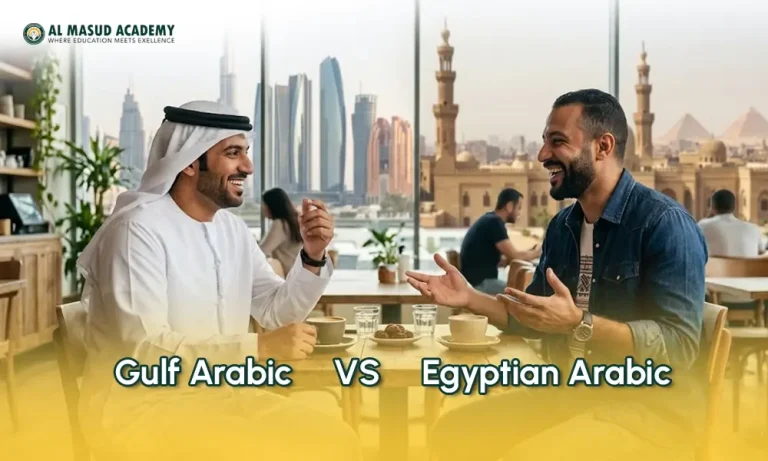
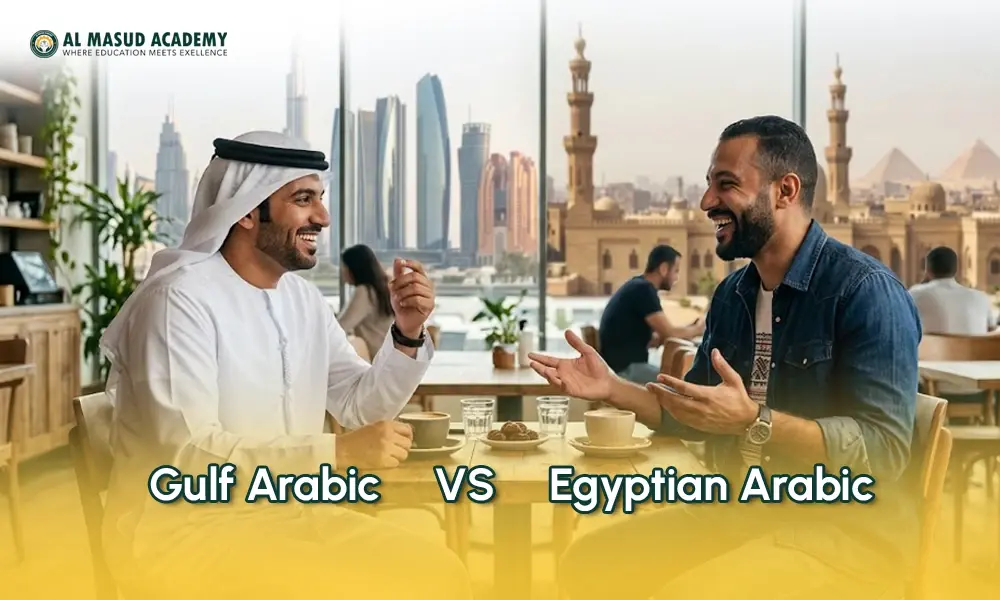
Both Gulf Arabic and Egyptian Arabic are powerful dialects, but they serve very different purposes. Gulf Arabic (also called Khaleeji...
-
-
April 8, 2026
You don’t need a language degree, a sabbatical, or two free hours a day. If you live and work in...
-
-
April 3, 2026
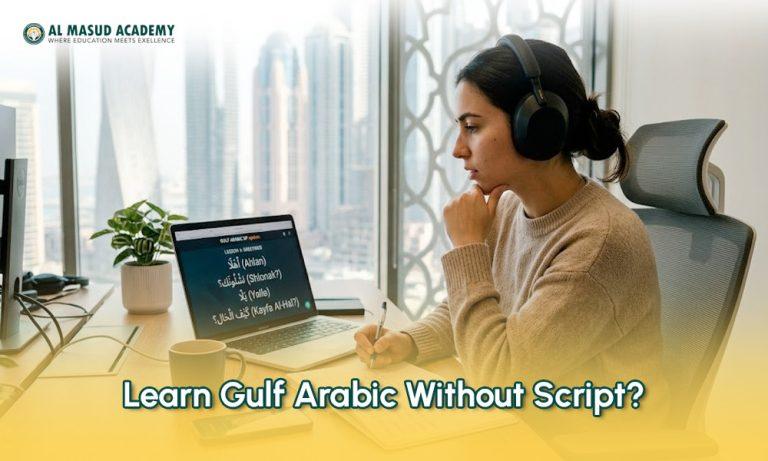
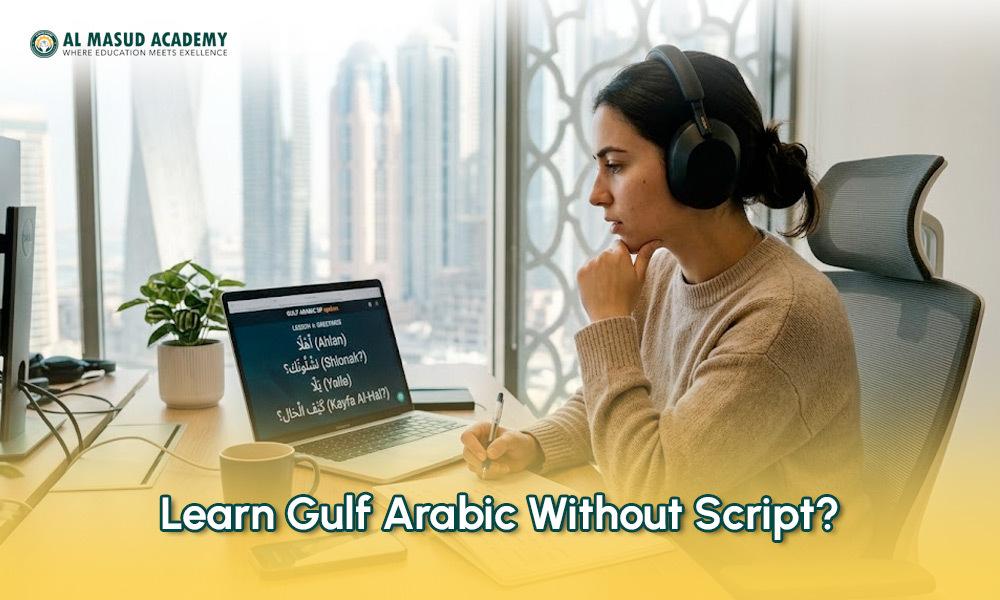
Yes, you can. And if the Arabic script has been the thing stopping you from starting, you can let that...
-
-
April 2, 2026