0
    0
    Your Cart
    Your cart is emptyReturn to Shop
        Best Way to Learn Gulf Arabic Online

        Live Zoom vs Self-Paced: Best Way to Learn Gulf Arabic Online

        You moved to Dubai for work. Your taxi driver speaks Arabic. You freeze. This happens daily.

        Most Arabic courses teach Modern Standard Arabic, which is the formal language in newspapers and documents. But nobody speaks it in daily life. 

        Your coworkers and neighbors use Gulf Arabic with slang and local phrases that textbooks never mention. The gap between what you learn and what you need causes real problems. 

        You miss out on deeper friendships. You can’t negotiate prices at the souk. You feel like an outsider in your own neighborhood. 

        After helping thousands of expats across the UAE, Qatar, and Saudi Arabia master Gulf Arabic, we’ve seen this struggle repeatedly at Al Masud Academy. 

        Our focus on practical conversation-based learning for Gulf residents gives us direct insight into what actually works versus what sounds good on paper.

        That’s why learning Gulf Arabic online has become the solution for busy expats. 

        You study from your apartment. You skip commutes to language schools. You work around demanding schedules.

        But should you join live Zoom Arabic classes with a teacher, or take a self-paced Arabic course on your own time?

        This guide breaks down both methods to show which one helps you speak faster, costs less, and fits your lifestyle better.

        Why More Expats Are Learning Gulf Arabic Online

        Online Gulf Arabic courses have gained immense popularity because they reflect the realities of how expats live and work today. 

        Flexible schedules, no commute, and access to native speakers make online learning the smart choice. You can practice during lunch breaks or after your kids go to bed.

        The shift to online learning stems from three key factors: expats prefer practical dialects over formal Arabic, modern lifestyles demand flexibility, and online platforms deliver proven results.

        Why You Need Gulf Arabic, Not Textbook Arabic

        Gulf Arabic opens doors that Modern Standard Arabic can’t. 

        When you chat with Emirati colleagues or haggle at the Gold Souk, everyone speaks Khaleeji. According to language learning data, expats choose dialect courses over formal Arabic at overwhelming rates because daily conversations happen exclusively in dialects.

        Online Arabic learning has expanded rapidly across the Gulf, driven by the UAE’s Vision 2031 plan, which promotes Arabic language education through its National Agenda for Arabic Language. 

        Expats across the region increasingly seek practical dialect training to enhance career opportunities and daily integration.

        Online Learning Fits Your Life Better Than Classrooms

        Traditional classrooms don’t fit modern expat life. 

        You work 50-hour weeks and travel across time zones. Online platforms give you 24/7 access instead of rigid schedules that conflict with Ramadan or business trips.

        Does Online Gulf Arabic Actually Work?

        Yes. 

        Research from language learning platforms shows that dialect students can reach conversational level online when they combine structured lessons with real-world practice. That matches in-person results when you combine structured lessons with real-world practice.

        Pro Tip: Always start with survival phrases first. Learn how to order coffee, ask directions, and greet neighbors.

        Three Ways to Learn Gulf Arabic Online

        You have three main options for learning Gulf Arabic: live classes with teachers, self-study courses, or a mix of both. 

        Each method works differently and suits different types of learners. Your choice depends on your schedule, budget, and how you learn best.

        Live Classes with Native Speakers

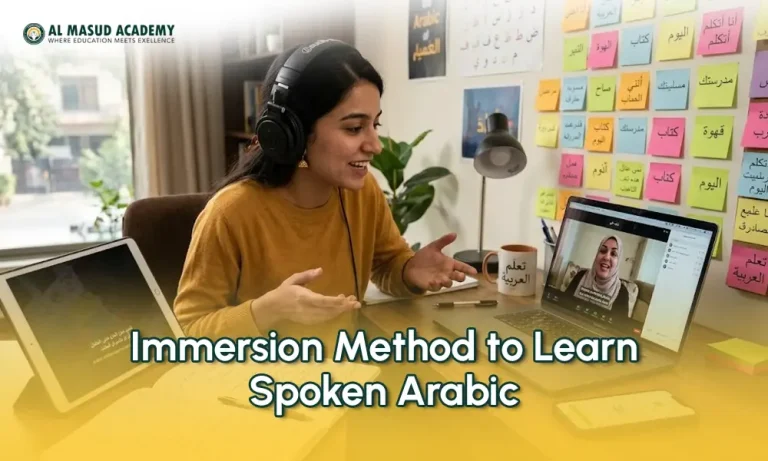
        Live Zoom Arabic classes connect you with native speakers through video calls. 

        Sessions typically run 45 to 90 minutes, two to five times weekly. Teachers share screens for Arabic script and use breakout rooms for pair practice.

        Self-Paced Learning on Your Schedule

        Self-paced courses give you recorded videos, audio files, and practice exercises accessible anytime. 

        Popular platforms offer 900+ hours of content with lifetime access. You move through lessons at your own speed.

        Combining Both Methods (The Hybrid Approach)

        Hybrid programs combine both approaches, that is, recorded lessons plus weekly live sessions. 

        This format has become increasingly popular because students want video libraries for review while getting live speaking practice.

        What Happens in Live Zoom Classes?

        Live Zoom classes connect you with native speakers for structured, interactive sessions that build real conversation skills. You’ll follow a proven format that balances new learning with speaking practice. Understanding how these classes work helps you decide if this method fits your learning style.

        How Your Classes Are Structured

        Live sessions follow a clear pattern: 10-minute warm-up with greetings, 20 minutes on new vocabulary through dialogues, 30 minutes of role-plays like ordering food or job interviews, then homework assignments.

        How Teachers Run the Sessions

        Teachers use breakout rooms to split groups into pairs so everyone speaks. 

        They rotate between rooms, checking pronunciation and answering questions. Classes emphasize immersion without English crutches.

        Who Should Choose Live Classes?

        Working professionals, shy beginners needing correction, and goal-driven expats benefit most. 

        Live classes consistently show higher completion rates than self-study courses. Scheduled sessions create accountability that keeps students showing up even when motivation dips.

        What You Get with Self-Paced Courses

        Self-paced courses let you study Gulf Arabic on your own schedule without live classes or deadlines. 

        You get access to video lessons, quizzes, and practice materials organized by difficulty level. Everything lives on a website or app you can open anytime.

        How Self-Paced Courses Are Organized

        Self-paced courses structure content from beginner (A1) to advanced (C1) using 10 to 20-minute videos. Dashboards track progress with gamified streaks to maintain motivation.

        Course Materials and Resources

        Your course includes high-definition videos with subtitles, downloadable MP3s for commutes, interactive quizzes, and printable cheat sheets for Gulf phrases like “shlonak?” (How are you?) 

        Built-in review systems help new vocabulary stick long-term.

        Who Should Choose Self-Paced Learning?

        Self-paced learning shines for highly disciplined learners, shift workers with irregular schedules, or budget-conscious expats sampling dialects without commitment.

        Live Zoom vs Self-Paced: Which Way Helps You Learn Gulf Arabic Faster?

        Live classes typically help you learn Gulf Arabic faster because speaking practice beats passive watching. 

        You build conversation skills in weeks instead of months. Real-time interaction speeds up your progress dramatically, though self-paced learning offers advantages in flexibility.

        How Quickly You’ll Start Speaking Confidently

        Live classes build conversation skills in weeks instead of months. 

        You simulate real conversations where you must respond quickly. Regular speaking with partners develops natural fluency that solo study can’t replicate.

        How Each Method Handles Pronunciation

        Gulf Arabic has throaty sounds like “gh” and uvular “q” absent in English. 

        Teachers catch mistakes immediately. Self-paced relies on self-recording, often inaccurate without ear training.

        Remembering What You Learn

        Vocabulary sticks better when you use words during conversations. 

        Teachers tell stories and quiz you with peers. Active use beats passive watching for making words stick long-term.

        Which Method Keeps You On Track

        Live Zoom gives you fixed schedules and teachers who notice absences. 

        Self-paced demands iron willpower to create and stick to study schedules without external checking.

        Which Method Fits Busy Lives Better

        Self-paced wins for erratic schedules, but live classes enforce better habits through routine. Through tracking student progress, we’ve seen consistency beats intensity every time.

        Aspect Live Zoom Self-Paced
        Speed of Confidence High (live partner practice) Medium (solo practice)
        Pronunciation Real-time teacher corrections AI tools or self-review
        Vocabulary Retention Contextual application Repetition drills
        Accountability Class reminders Personal discipline
        Flexibility Scheduled time slots Anytime access

        Which Method Is Better for Speaking Gulf Arabic Fluently?

        Live conversation practice wins for speaking fluency because it mimics real Gulf social situations. 

        You learn rhythm, timing, and natural responses that recordings can’t teach. Fluency means flowing speech, not perfect grammar, and that requires real interaction.

        Why Live Practice Builds Real Fluency

        Live practice mimics real Gulf social situations, building rhythmic fluency essential for natural responses. Without it, learners plateau at scripted phrases and can’t handle follow-up questions.

        Getting Corrected Before Bad Habits Form

        Feedback prevents embarrassing mistakes like mixing formal Arabic with Gulf dialect, which natives find comical. 

        Instructors demonstrate how intonation (the rise and fall of your voice) changes meaning from polite to sarcastic.

        What Self-Learners Miss Without a Teacher

        Self-learners struggle with accent variations (Emirati softness versus Saudi sharpness), skip cultural fillers like proper “inshallah” timing, and over-rely on apps that ignore important idioms.

        Important: Cultural context matters as much as vocabulary. Learning when to use phrases correctly takes native speaker guidance.

        Live Zoom vs Self-Paced: Cost, Time, and Value Comparison

        Live classes cost more upfront but deliver faster results, while self-paced courses offer cheaper lifetime access. 

        Your budget and timeline determine which option makes sense. Both can work if you commit fully; the question is which fits your priorities better.

        What Each Method Actually Costs

        Live group classes run 250 to 550 AED monthly. Private sessions cost 80 to 120 AED per hour. Self-paced courses start at 299 AED for lifetime access with no recurring fees.

        How Much Time You’ll Need Each Week

        Live classes demand 4 to 8 hours weekly, including homework. 

        Self-paced averages 5 to 10 hours based on your speed. Ramadan schedules often favor self-paced flexibility.

        What You Get for Your Investment

        Live classes provide certificates that boost CVs for Gulf jobs and connect you with other expats. Self-paced offers perpetual review at a fraction of the cost, perfect for maintenance after reaching conversational level.

        Factor Live Zoom Self-Paced
        Cost 300-500 AED/month 200-350 AED lifetime
        Weekly Time 4-6 hours fixed 5-10 hours variable
        Long-term Value Fluency + certificates + networking Endless review access
        Convenience Moderate High

        What Do Language Learners and Expats Usually Struggle With?

        Most Gulf Arabic learners face three major challenges: understanding different accents, switching from formal to spoken Arabic, and building confidence to actually speak. 

        These obstacles are normal and predictable. Knowing what trips up other learners helps you prepare and choose the right learning method.

        Why Each Gulf Country Sounds Different

        Gulf accents vary wildly, Qatari trills versus Kuwaiti gutturals. These differences overwhelm students learning from scripts alone.

        The Gap Between Textbook and Real Conversation

        Shifting from formal Arabic’s rigid structure to the Gulf’s dropped vowels and contractions feels alien. 

        Textbooks overload formal vocabulary that sounds weird in casual conversations.

        Breaking Through the Fear of Speaking

        Confidence crashes without validation from native speakers. Expats freeze mid-sentence, fearing judgment, delaying integration into local communities.

        Which Online Gulf Arabic Learning Method Is Best for Expats in the Gulf?

        The best method depends on your work schedule, how long you’ve been in the Gulf, and what you need Arabic for. 

        A finance professional working 12-hour shifts needs different solutions than a new arrival settling into Dubai. Match the method to your specific situation for faster results.

        If You Work Long or Irregular Hours

        Finance professionals and oil industry workers with 12-hour shifts prefer evening self-paced or weekend hybrid classes. 

        Europeans adjusting to GMT+4 do well with morning live sessions.

        Your Timeline: Just Arrived or Settled In?

        New arrivals benefit from intensive live Zoom during their first 30 to 90 days for quick conversational ability. 

        Long-term residents can switch to self-paced for maintenance and vocabulary expansion.

        When You Need Arabic for Business

        Business professionals excel with tailored Zoom scenarios, practicing client pitches and negotiations. 

        After working with hundreds of UAE business clients, we customize content for the banking, real estate, and hospitality sectors.

        How Long Does It Take to Learn Gulf Arabic with Each Method?

        Most expats reach conversational Gulf Arabic in 3 to 9 months, depending on their chosen method and practice intensity. 

        Language learning timelines vary widely by person, but clear patterns emerge. Your consistency matters more than your method.

        Timeline with live Zoom classes

        Live students typically hit A1 basics in one month (20 hours total). A2 conversational level takes 3 to 4 months (100 hours). B1 fluency arrives in 6 to 9 months with 3 hours weekly plus immersion.

        How Fast You’ll Progress with Live Classes

        Self-paced timelines stretch to 6 to 18 months for equivalent levels as motivation drops without accountability.

        How Long Self-Paced Learning Takes

        Speed depends on maintaining daily 30-minute practice, natural aptitude, and immersion through the Gulf Netflix series or language exchange apps. 

        Consistency beats intensity. Studying 30 minutes daily outperforms cramming 4 hours on weekends.

        How to Choose the Right Gulf Arabic Online Course for You

        Not all Gulf Arabic courses are created equal; asking the right questions before enrolling saves you time and money.

        Smart questions reveal quality programs and help you avoid wasting months on the wrong course. Here’s what separates good courses from great ones.

        What to Ask Before You Enroll

        Does the course focus purely on Gulf Arabic? 

        Are teachers native speakers from your target country? 

        Can you try a free trial? What’s their refund policy? 

        Does a community forum connect you with other learners? Clear, confident answers to these questions separate professional programs from amateur ones.

        Signs of a high-quality Gulf Arabic program

        Quality programs offer comprehensive content (500+ hours), employ native Gulf speakers as most instructors, and include mobile apps with progress tracking. 

        CEFR-aligned quizzes measure your actual level, while certificates from accredited bodies like ACTFL add value to your resume.

        Why instructor experience with expats matters

        Teachers who’ve worked with 1,000+ Western students understand your specific challenges. They prioritize survival phrases over literature and know you need extra pronunciation practice.

        Action Item: Message current students from any course you’re considering. Ask about response times, teacher quality, and recommendations.

        Why Live Instructor-Led Learning Often Works Faster for Gulf Arabic

        Dialects require nuanced delivery, instant error correction, and structured progression that recordings simply can’t provide. 

        Native speakers teach you not just words, but when and how to use them naturally. This human element accelerates learning in ways self-study can’t match.

        Why Dialects Need a Live Native Speaker

        Dialects demand nuanced delivery that recordings can’t capture. Native speakers weave cultural context into lessons, explaining subtleties like when “yalla” varies by tribe.

        Catching Mistakes Before They Become Habits

        Real-time corrections cement good habits immediately. 

        You don’t practice mistakes for weeks before discovering errors. This instant feedback skyrockets confidence for unscripted situations like bargaining or networking.

        Following a Clear Path vs Wandering Aimlessly

        Structured curricula map clear milestones, preventing aimless wandering. 

        Your teacher tracks whether you’re progressing normally or need extra support versus self-paced YouTube rabbit holes.

        Can You Combine Live Zoom and Self-Paced Learning?

        Combining both methods creates the optimal learning experience for most students. 

        Hybrid learning gives you structured speaking practice plus flexible review time. You get the best of both worlds without the weaknesses of either alone.

        Building Your Weekly Study Schedule

        Take core live classes on Tuesdays and Thursdays for speaking. Watch self-paced videos on Wednesdays for grammar deep dives. 

        Use weekends for language exchange apps. Several platforms bundle these components seamlessly.

        Making the Most of Course Recordings

        Course recordings let you catch up on missed sessions or review difficult concepts. Apps track progress across both formats, showing which areas need attention.

        Avoiding burnout and confusion

        Cap total study at 10 hours weekly maximum. 

        Stick with one platform’s system rather than mixing multiple programs that might contradict each other. 

        Through working with students using combined approaches, we’ve found the sweet spot is two live sessions plus three hours of self-study weekly.

        Final Verdict: What Is the Best Way to Learn Gulf Arabic Online?

        Live Zoom classes deliver the best way to learn spoken Gulf Arabic online for most learners through interaction that’s irreplaceable for mastering dialects.

        You’ll reach fluency twice as fast. Expats in high-stakes environments like Dubai sales thrive with this method.

        Self-paced fits ultra-flexible schedules or tight budgets. 

        Hybrid programs bridge both approaches ideally. For Gulf Arabic for expats success, choose native instructors from your target country; Emirati teachers for Dubai, Saudi teachers for Riyadh.

        At Al Masud Academy, we’ve built our approach around what actually works for expats. 

        Our students master practical conversation through proven methods combining live support with lifetime recorded access.

        Your first “shukran” conversation awaits. The Arabic you need isn’t in textbooks; it’s in the voices of native speakers ready to guide you from beginner to confident conversationalist.

        Common Questions About Learning Gulf Arabic Online

        Is Gulf Arabic harder than Modern Standard Arabic? 

        Gulf Arabic is actually easier for daily conversation because it has simpler grammar, though Modern Standard Arabic is better for reading formal texts.

        Can beginners start with live Zoom classes? 

        Yes, complete beginners thrive in live classes because teachers guide you from day one with proper pronunciation and foundational phrases.

        How many hours per week should I study Gulf Arabic? 

        Aim for 30 minutes daily (3.5 hours weekly) for steady progress, or 4-6 hours weekly if you want faster results with live classes.

        Do online Gulf Arabic courses help in real conversations? 

        Yes, especially live classes with native speakers. Students report using classroom phrases successfully in markets, taxis, and workplaces within weeks.

        What is the fastest way to start speaking Gulf Arabic?

        Intensive live Zoom classes (3-5 sessions weekly) combined with daily immersion through Arabic-speaking friends or media get you conversational fastest.

        Share:

        Leave A Reply

        You May Also Like

        You keep hearing people mention “Gulf Arabic,” “Khaleeji,” and “Emirati Arabic.”  Are they talking about the same thing? Not quite....
        • February 27, 2026
        Khaleeji is the tongue of the thriving Arabian world. A good grasp of it will instantly place you at the...
        • February 23, 2026
        Modern Standard Arabic (MSA) is used for news and books, but people in the Gulf rarely use it in everyday...
        • February 22, 2026